
Free lesson: The Editing Room (Grade 11 English)
Try a complete lesson free: students edit the same twelve documentary clips into two opposite stories and discover how editing creates truth.
1 free lesson
9 items
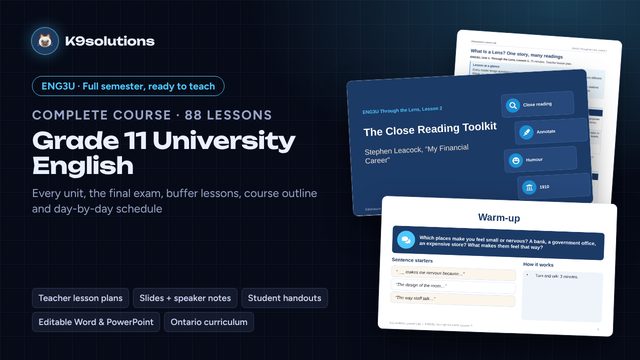
Everything you need to teach Grade 11 University English for a full semester: six units, the full texts of Othello, The Great Gatsby and every poem, story and speech, an independent novel study, the culminating task and a final exam.
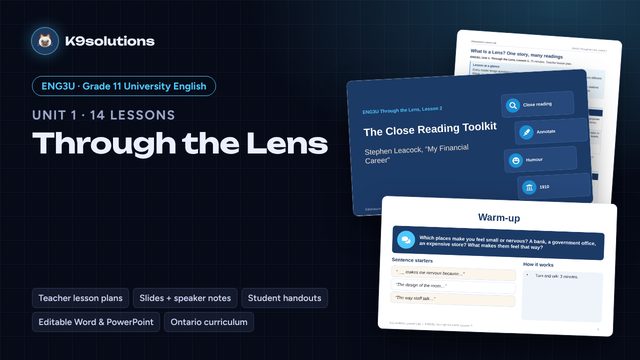
Five critical lenses and five public domain stories (Leacock, Chopin, Gilman, Sui Sin Far, Mansfield), ending with a lens seminar and a literary analysis essay.
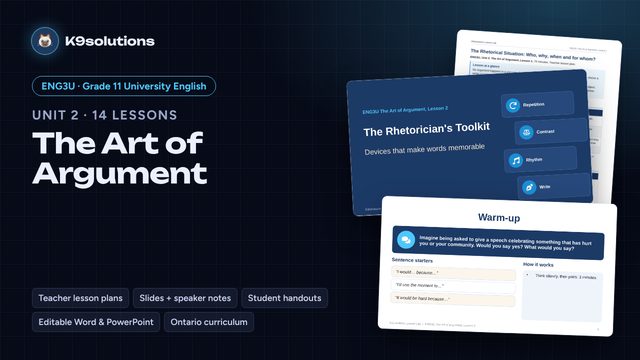
Rhetoric through Lincoln, Douglass, Sojourner Truth and Nellie McClung, then research, MLA and a researched argumentative essay.
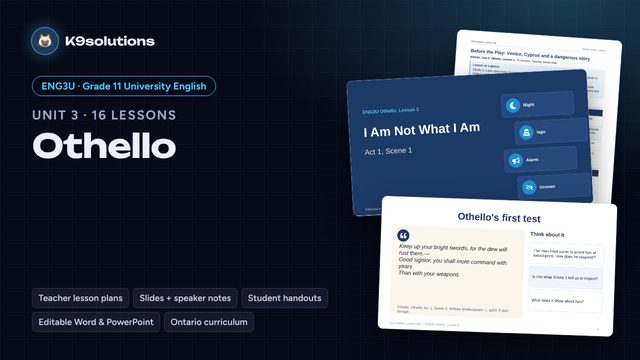
Shakespeare's Othello act by act: Iago's manipulation, race and power, gender and tragedy, with a full reading edition of the play included.
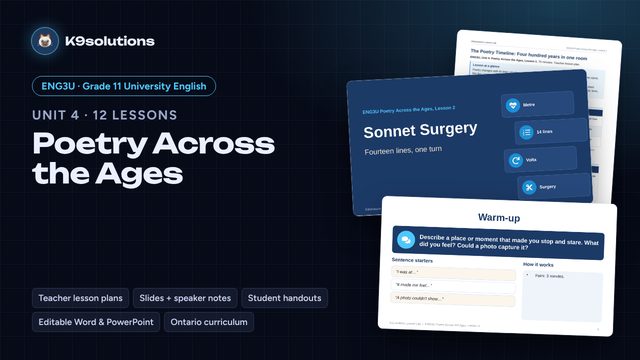
From Shakespeare's sonnets to the Harlem Renaissance, the First World War and Modernism: 27 public domain poems, sonnet surgery and a recorded poetry reading.
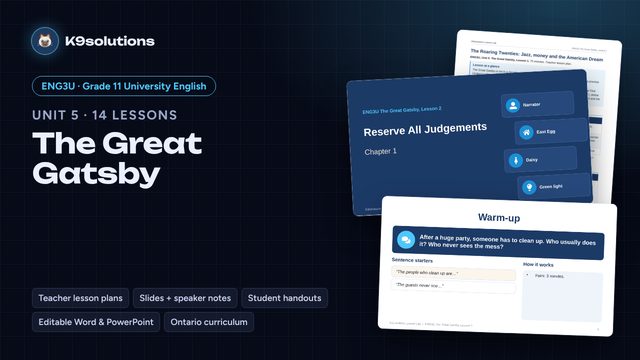
Is the American Dream a promise or an illusion? Fitzgerald's novel chapter by chapter, with the full text included.
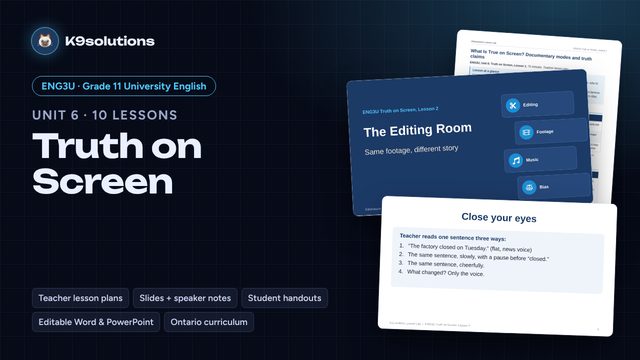
How documentaries and podcasts shape truth: documentary modes, an editing-room experiment, interview ethics, true crime, and a student podcast or mini-documentary.
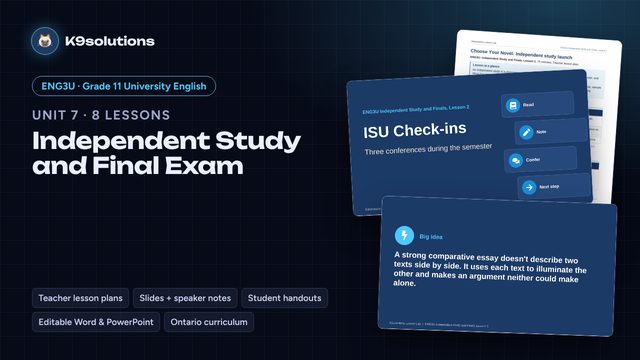
The end of the course: an independent novel study with a comparative essay and seminar, review lessons, and a two-hour final exam with an original sight story and marking guide.
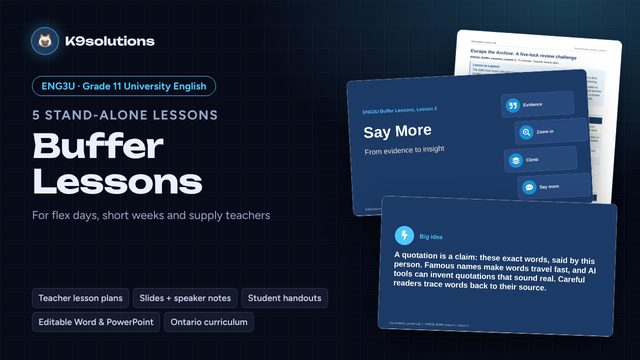
Five stand-alone ENG3U lessons for flex days, short weeks and supply teachers, each tied to specific curriculum expectations.
8 items
A free, complete semester of Grade 11 University English through First Nations, Métis and Inuit voices: six units, the independent study, a final evaluation, a course map, a day-by-day schedule covering every expectation and a course outline.
Launch NBE3U with land, Nations and treaties, respectful terminology, cultural text forms such as wampum, the four course themes and the truth of residential schools, ending in a research brief and an inquiry roundtable.
Deconstruct how First Nations, Métis and Inuit peoples have been represented in Canadian fiction, poetry, photographs, team names, film, textbooks and news, then answer stereotypes with the work of Indigenous creators.
Read Indigenous writers who answered their settler readers between 1885 and 1921: E. Pauline Johnson, Zitkála-Šá and Charles Eastman, included in full in a 32-page reader, with a comparative essay and a “then and now” seminar.
Study First Nations, Métis and Inuit oral traditions as texts, law and evidence: listening practices, wampum, story figures and protocols, the potlatch ban, revitalization and listening to a recorded teaching.
Literature circles on contemporary novels by First Nations, Métis and Inuit writers, chosen by the teacher, plus poems, a play and short fiction, the people who make Indigenous literature happen, and a literary essay.
Contemporary Indigenous media: APTN, NFB Indigenous Cinema, Isuma and Atanarjuat, documentary, music, podcasts, Idle No More and language technology, ending in a student-made spotlight media text.
The last unit of NBE3U: an independent study of a book by a First Nations, Métis or Inuit author with a comparative essay and seminar, review lessons, and a final evaluation built on an original sight text.
No lesson plans match that. Try another word.