
SNC2D Unit 5: Light and Geometric Optics
The electromagnetic spectrum, sources of light, reflection, plane and curved mirrors, ray diagrams, the mirror and thin lens equations, refraction and the index of refraction, total internal reflection, lenses, the eye and light technologies.
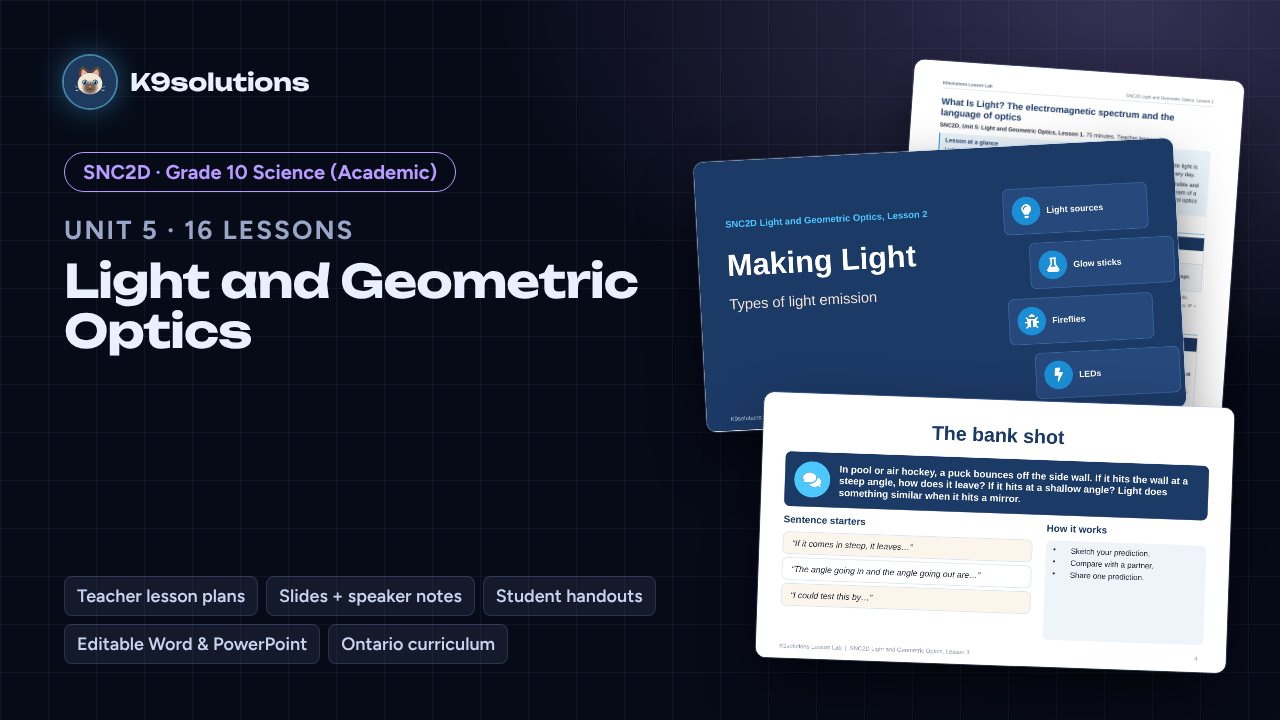
How do mirrors and lenses control light? Students explore the electromagnetic spectrum and how light is made, then investigate reflection and refraction with cheap, safe labs: flashlight slit beams, spoons, clear plastic, water, a light pipe and magnifying glasses. They draw ray diagrams, describe images with SALT, use the mirror and thin lens equations and n = c/v with one consistent sign convention, and explain total internal reflection, optical instruments, the eye and natural light shows. They also evaluate vision and light technologies, including the work of Canadians Willard Boyle and Donna Strickland. Every calculation has a worked solution.
Assessment of learning: an Optical Device Design Challenge (build and test a periscope, pinhole camera or pizza-box solar oven) with a rubric, plus a unit test with a worked answer key.
Lessons
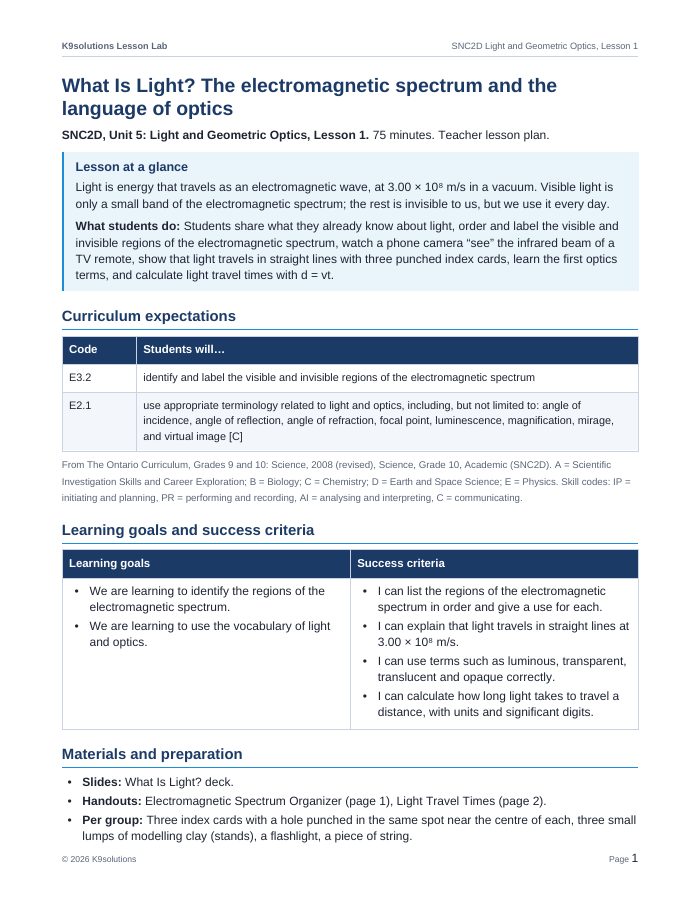
- What Is Light?
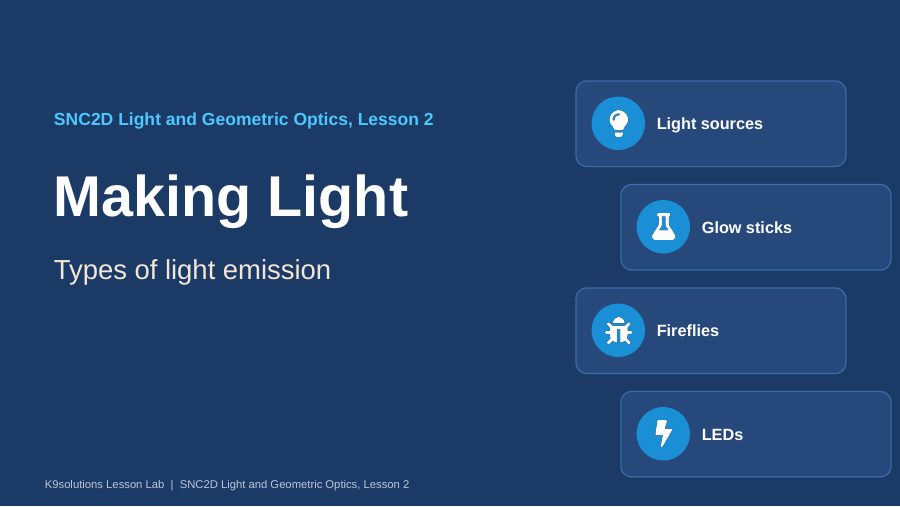
- Making Light
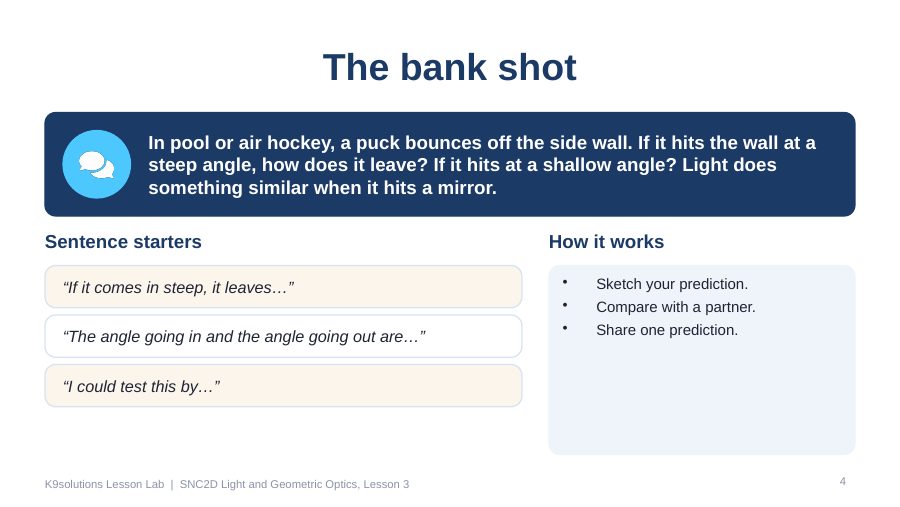
- Laws of Reflection Lab
- Images in Plane Mirrors
- Curved Mirrors
- Ray Diagrams for Curved Mirrors
- The Mirror Equation
- Refraction Lab
- Index of Refraction and the Speed of Light
- Total Internal Reflection
- Converging Lenses
- The Thin Lens Equation
- Optical Instruments
- Eyes and Vision Technology
- Light Technology and Society
- Nature's Light Shows
What you get
- A teacher lesson plan for every lesson: curriculum expectations, learning goals and success criteria, a timed sequence, differentiation, safety notes, look-fors and answer keys
- Detailed slideshows (15 to 17 slides per lesson) with speaker notes on every slide: what to say, what to ask, what to look for and how long to spend, plus warm-ups, worked examples, model answers and answer-key slides
- Student handouts, lab sheets and exit tickets
- Editable Word and PowerPoint files, plus PDFs
- A unit overview, the summative task and rubric, and a unit test with a worked answer key
Built for the Ontario Grade 10 Science, Academic curriculum (SNC2D), and easy to adapt for any Grade 10 science class.
Look inside
Real pages from this download. Click a page to see it full size.
Used this resource? Leave a review
Reviews come to us privately first. With your permission, we may share your first name and comments on this page.